Logan Frank · 21 September 2026
Tech Partnerships Fuel Climate-Focused Digital Workshops for Polish Vocational Students in Secondary Schools
Tech partnerships between software companies, hardware providers, and Polish educational authorities have accelerated the rollout of climate-focused digital workshops in vocational secondary schools across the country, and these initiatives combine coding exercises with modules on renewable energy systems, carbon tracking software, and sustainable manufacturing processes while students in programs like mechanics, electronics, and IT gain hands-on experience through virtual simulations and data analysis platforms.
According to reports from the European Commission, such collaborations have reached over 120 vocational institutions since their expansion phase began, and the programs integrate open-source tools with localized curricula that address Poland's specific industrial challenges including coal transition planning and urban air quality monitoring.
Program Structure and Curriculum Integration
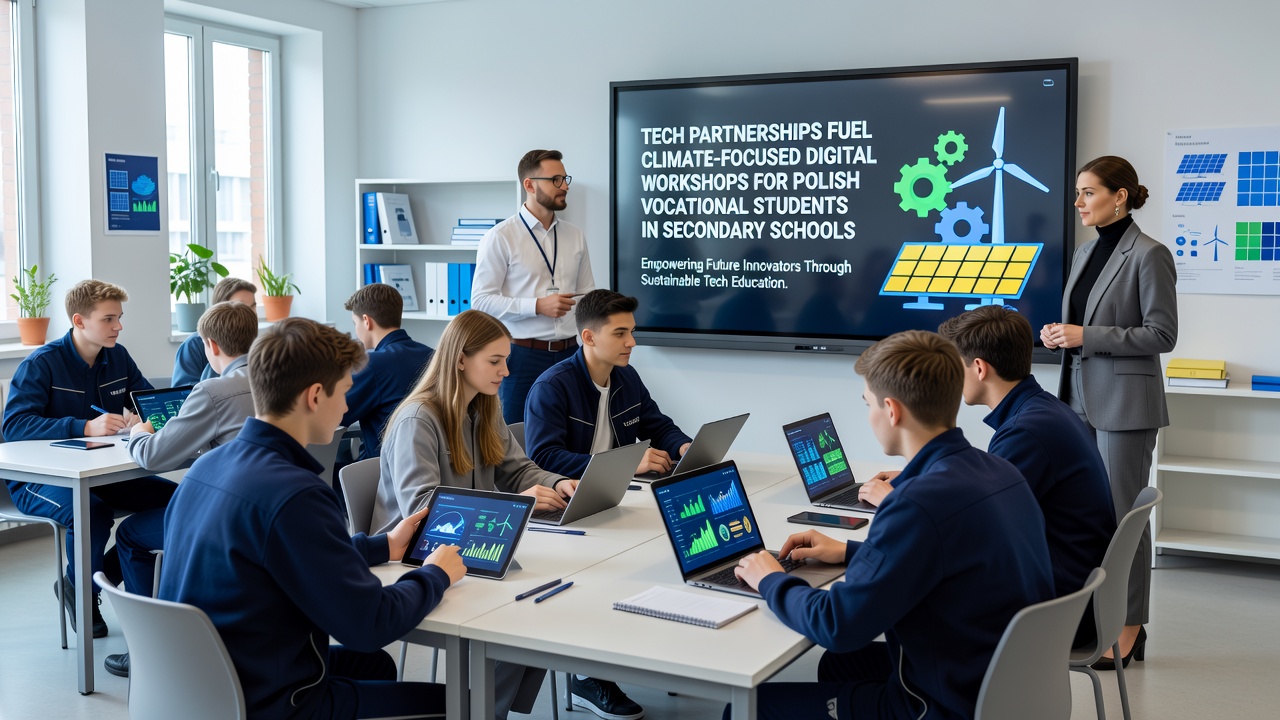
Workshops typically span eight to twelve weeks and run in parallel with standard vocational tracks, so participants learn to build simple IoT sensors for environmental data collection, then they analyze results using cloud-based dashboards provided through corporate sponsorships. Observers note that these sessions often occur in dedicated lab spaces equipped with donated laptops and tablets, and instructors from partner tech firms deliver live demonstrations while school teachers handle follow-up assessments and project grading.
September 2026 marks the next major intake period when an additional 45 schools are scheduled to join the network, and this phase incorporates updated modules on circular economy principles and AI-driven climate modeling that align with evolving EU green deal reporting requirements.
Key Partners and Resource Allocation
Leading technology firms supply both proprietary and open platforms, whereas regional education boards coordinate logistics and teacher training sessions, and funding streams include a mix of corporate social responsibility budgets along with grants from national environmental agencies. Data from the Polish Ministry of Education indicates that participating students complete an average of three capstone projects per workshop cycle, with many submissions focusing on practical applications such as optimizing energy use in small manufacturing setups or mapping local biodiversity through mobile apps.
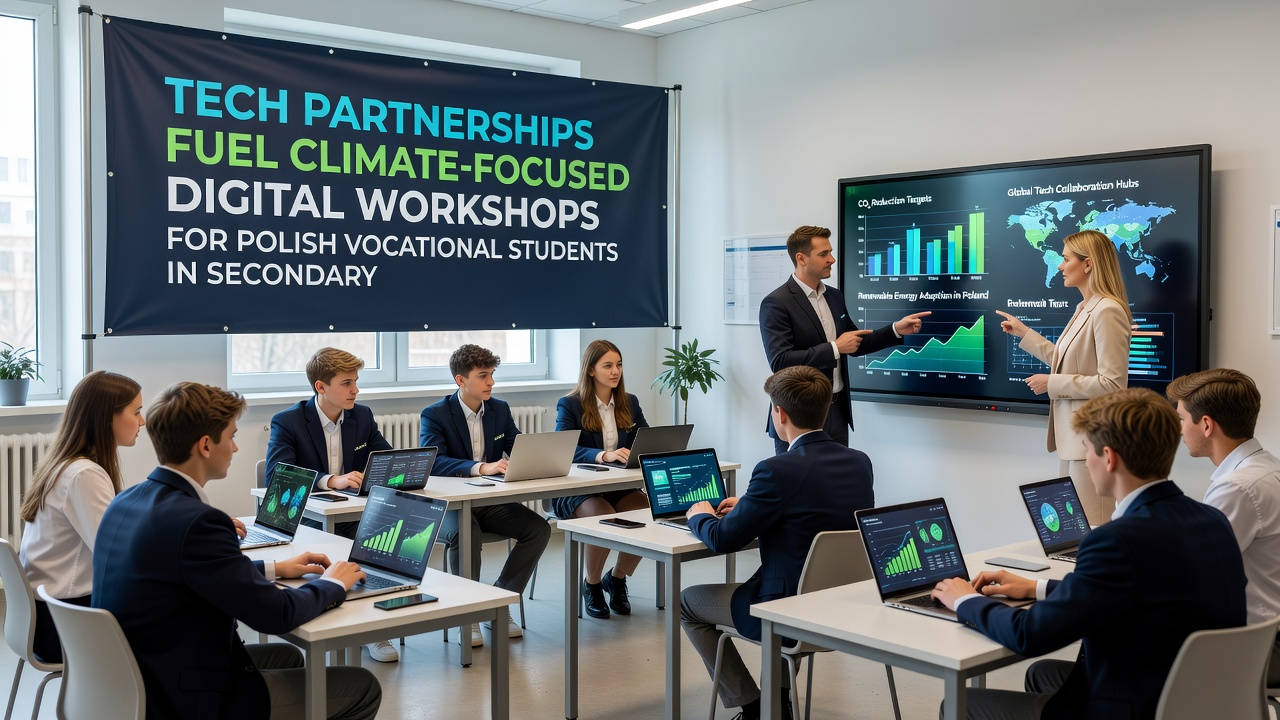
One study from the OECD highlighted similar partnership models in other European regions, and the findings showed measurable gains in digital literacy scores among vocational cohorts exposed to integrated climate content. Polish programs build on these precedents by tailoring content to local industries like automotive repair and agricultural technology, where students apply digital skills to reduce emissions in real-world scenarios.
Student Outcomes and Broader Reach
Completion rates have remained above 85 percent across the initial cohorts, and graduates frequently cite the workshops as direct preparation for apprenticeships in green tech sectors. Researchers at Warsaw University of Technology have tracked longitudinal data showing increased enrollment in related higher education pathways among participants, while industry reports from the Polish Chamber of Commerce note rising demand for workers skilled in both vocational trades and climate software tools.
Community outreach components extend the workshops beyond school walls through public webinars and student-led demonstrations at local events, and these activities help disseminate findings on topics like waste reduction algorithms and precision agriculture sensors to wider audiences in rural and urban areas alike.
Future Directions and Scaling Efforts
Expansion plans call for deeper integration with national vocational certification standards by 2027, and additional partnerships with research institutes aim to introduce advanced topics such as blockchain verification for carbon credits. Figures from ongoing evaluations reveal steady growth in female participation rates within traditionally male-dominated vocational streams, and program administrators continue refining delivery methods based on feedback from both students and industry mentors.
Conclusion
Tech partnerships have established a replicable framework for embedding climate education within Polish vocational secondary schooling, and the approach merges digital skill development with practical environmental applications that prepare students for evolving job markets. Continued investment in these workshops supports broader national goals around sustainability and workforce readiness while maintaining alignment with European-wide educational benchmarks.